

In Sydney's Lebanese community — Christian and Muslim families alike — the wedding arrival is rarely a single car. It's a convoy: a line of matched vehicles moving through the suburb together, horns and all, announcing the day to the whole neighbourhood before anyone reaches the doors. Done well it's one of the most joyful sights in a Sydney wedding, and one of the most demanding to coordinate. This guide, written from our base in Lakemba in the heart of it, covers how the Lebanese wedding convoy actually works and how to plan yours so it flows.
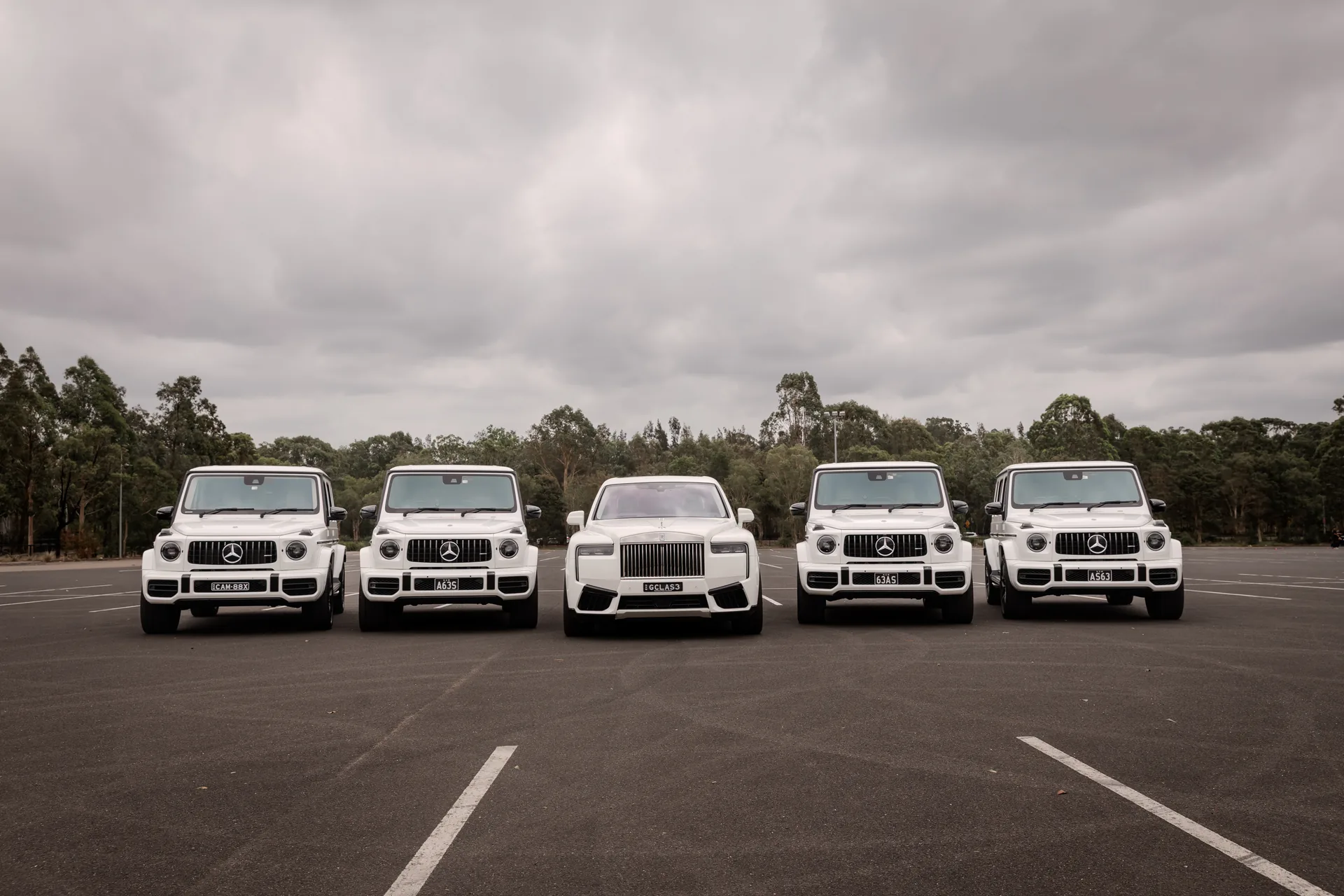
The convoy is the announcement. It should arrive as one line, not a scatter of cars.
Why the convoy matters
A Lebanese wedding is a family and community occasion before it is a private one, and the motorcade carries that. It's a public show of pride and celebration — the family arriving together, the feature car leading, the guests' cars behind, everyone moving as a single procession through the streets they grew up on. The cars are part of the statement, which is why the fleet is chosen to match rather than collected on the day. A line of vehicles that reads as one deliberate convoy looks entirely different from a handful of cars that happened to turn up together.
The line-up that photographs as one
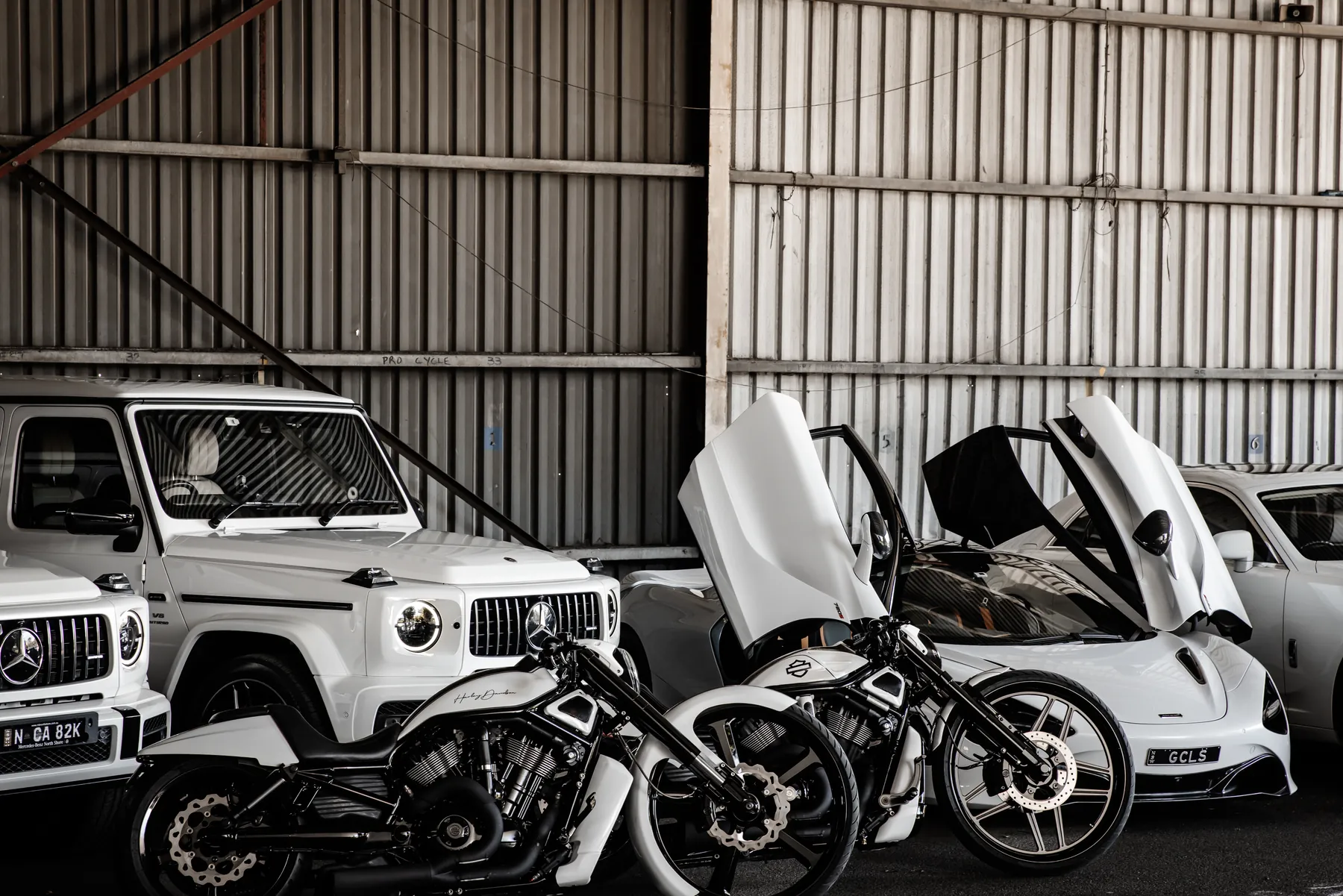
The shape most families choose is a feature car for the couple with matched cars behind. A Rolls-Royce Phantom or Cullinan leads, and a run of Mercedes-AMG G63 G-Wagons follows — same height, same squared-off presence, so the line looks composed from every angle. The G-Wagon is the convoy car in Sydney for a reason: almost no other SUV lines up cleanly, and three or four of them behind a Rolls-Royce is the look that defines the modern Lebanese arrival. That pairing is our Stance Line-Up; if you want to shape your own combination, build a line-up and we'll match it.

Planning the route through the suburb
The route is half the day. A good convoy route keeps the cars together, avoids the turns and lights that split a line, and passes the streets that mean something to the family. Our chauffeurs know the roads of Bankstown, Punchbowl, Greenacre, Lakemba and the wider South-West, so a procession stays tight rather than strung out across three sets of lights. We set the spacing, the lead car's pace and the order before the day, and the drivers hold it — that's the difference between a convoy and traffic. The full choreography, pickup order and timing is in our guide to planning a wedding car convoy.
The multi-home pickup
Many Lebanese weddings begin at more than one address — the bride's family home, the groom's, a grandparent's — gathered in sequence before the convoy sets off as one. It's one of the most meaningful parts of the morning and one of the easiest to under-plan. We map the pickup order and the route so the cars flow between homes without doubling back, then form up and move together. Getting this right is why the morning stays calm even when there are five stops before the ceremony.
Timing around the church or the mosque
Whether the ceremony is at a Maronite or Orthodox church or a mosque, the start time is fixed and the transport respects it. We time the convoy to deliver everyone a little early rather than on the minute, and where the ceremony and the reception sit hours apart — as they often do — we plan the fleet around the gap: holding the feature car, releasing others, or running a later pickup so no one is left waiting at a kerb. Tell us the tradition and its timings and we build the run sheet to honour them. For couples marrying during Ramadan or celebrating across Eid, see also luxury cars for Eid in Sydney.
The details that carry meaning
Small touches matter — ribbons in the wedding colours, the way the feature car is presented, the order the family travels in. Tell us what's customary for your family and we'll prepare the cars to suit; it's the kind of thing we handle quietly as part of the booking. Many families find a showroom visit in Lakemba is the easiest way to see the line-up in person and talk it through. When you're ready, check your date — the good Saturdays in the season go first.
The convoy morning, in order
A convoy runs on its order of pickups. This is the shape we build most mornings — share it with your families and we'll turn it into a timed run sheet:
- Confirm the line-up and the lead car — the feature car for the couple, the match behind it
- List every pickup address — bride's home, groom's, grandparents', in the order they should be gathered
- Set the form-up point — where the cars come together before moving as one line
- Fix the ceremony arrival time — with a buffer, so the convoy is early rather than on the minute
- Name one contact per family — not the couple, so nobody is fielding calls on the morning
- Agree the route — the streets that matter, and the turns that keep the line together
Hand us those six things, build your line-up, and the morning runs itself. Prefer to talk it through in person? Visit the showroom in Lakemba.
Lebanese wedding convoy FAQs
How many cars can you run in a convoy?
As many as the day needs. A feature car with three or four matched G-Wagons is the most common shape, but we coordinate larger lines regularly. Tell us the numbers and the suburbs and we'll set the order and route.
Do you serve Bankstown, Punchbowl, Greenacre and the South-West?
Yes — it's our heartland. Our showroom is in Lakemba and our chauffeurs know these streets, which is exactly why a multi-stop convoy morning stays calm with us.
Can you match the cars so the line looks uniform?
Yes. Matching the fleet so the convoy reads as one line is the whole point, and because the cars are ours we can guarantee the match rather than hope a sub-hire turns up.
Can you handle several pickup addresses before the ceremony?
Yes. We map a multi-home pickup so the cars gather in the right order without doubling back, then form up and move together.