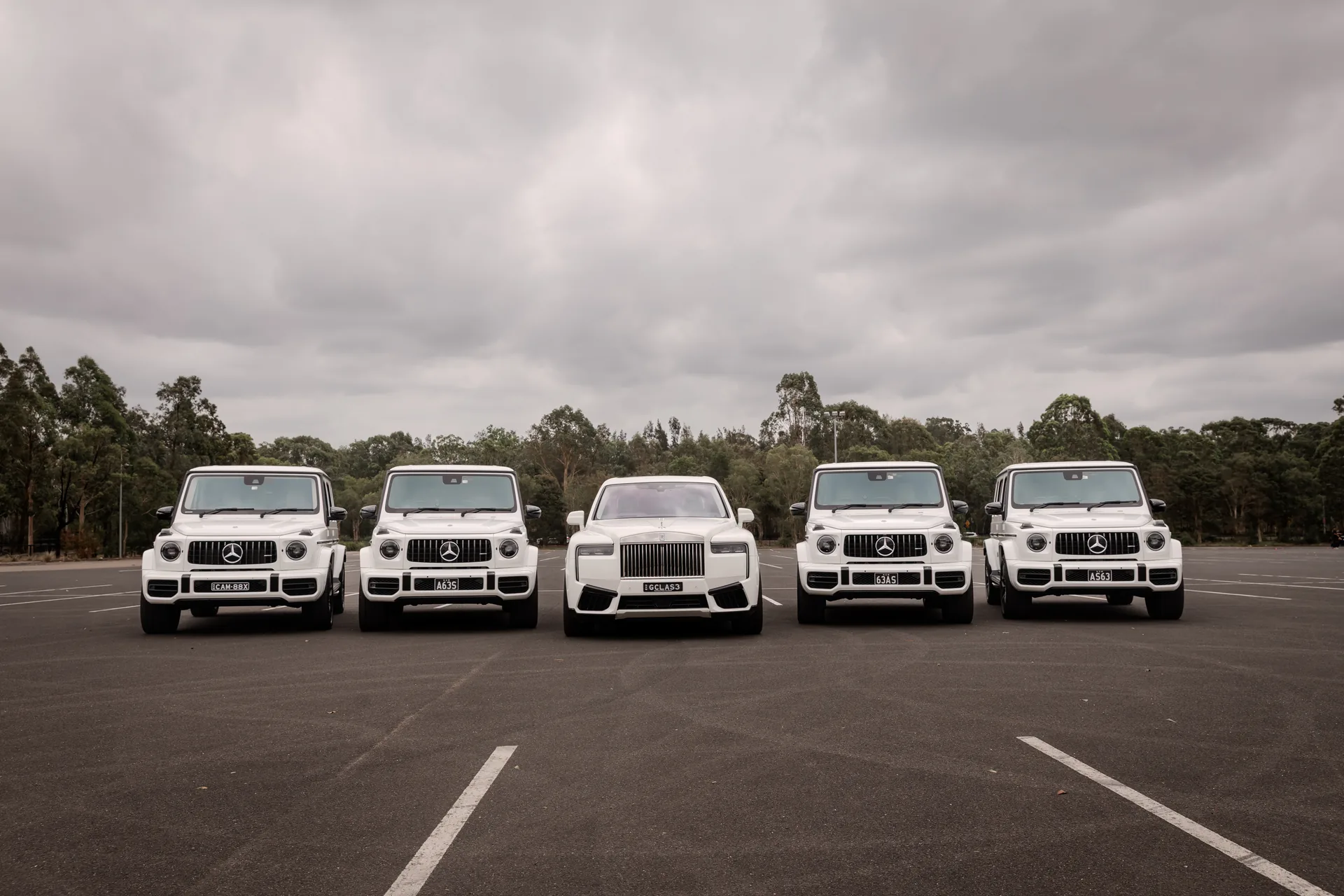


Sydney photographs differently after dark. The harbour turns black and the bridge becomes a lit object rather than a silhouette; sandstone goes warm under floodlight; and wet sandstone paving throws every tail-light back at the camera. A car that reads as merely expensive at noon reads as cinematic at ten at night. This is where to go, when, and what actually makes the difference.
Daylight shows you the car. Night shows you the city, and lets the car borrow it.
Why night is the harder shoot, and the better one
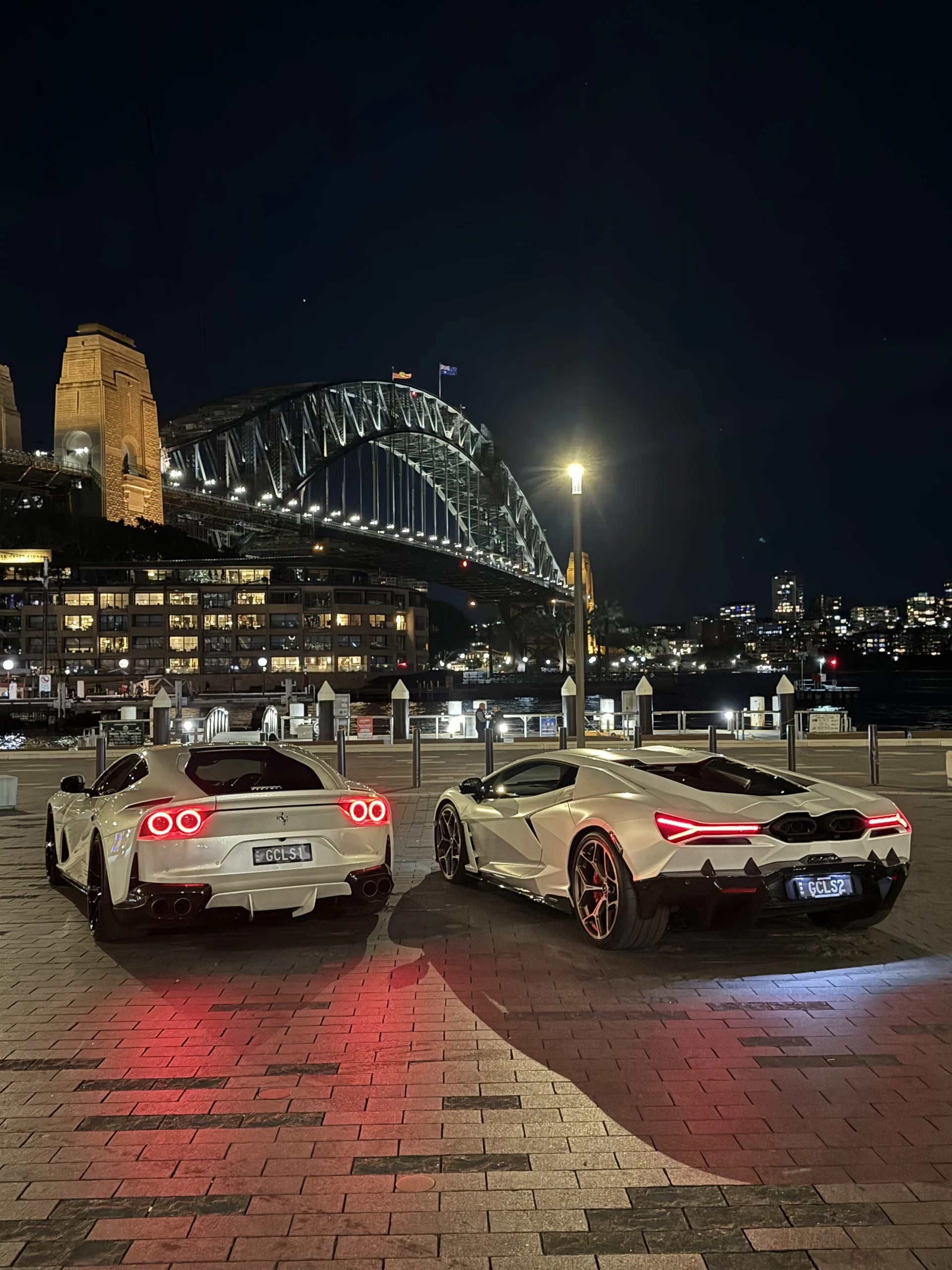
In daylight a supercar competes with everything around it. After dark the competition switches off: the background goes to black and whatever is lit becomes the composition. That is enormous power in a photographer's hands and it cuts both ways — a badly lit night shot is just a dark shape. What separates the two is almost always the ground. Wet sandstone, wet asphalt and painted line-marking act as mirrors, doubling the car's own lights and giving the frame a floor. If it has rained in the previous hour, go.
The harbour, and the shot everyone wants
The stretch of foreshore between Circular Quay and Dawes Point is the postcard for a reason: it is the one place where you can put a car in the foreground and the Harbour Bridge behind it without a long lens or a drone. It is also public, busy and tightly parked, which means the realistic window is late — after the restaurant crowd thins, before the early cleaners. Keep it lawful and unhurried: legal parking, engine off, no revving at midnight beside apartments. The photograph does not need noise.
Barangaroo and the modern city
If the bridge is the heritage frame, the western waterfront is the contemporary one — glass towers, hard modern light and long clean lines that suit a low car far better than sandstone does. It photographs cooler and more graphic, and it is the right backdrop when the brief is fashion or product rather than postcard. The same rule applies: the interest is in the reflections, so shoot the ground as much as the car.
The hour that actually works
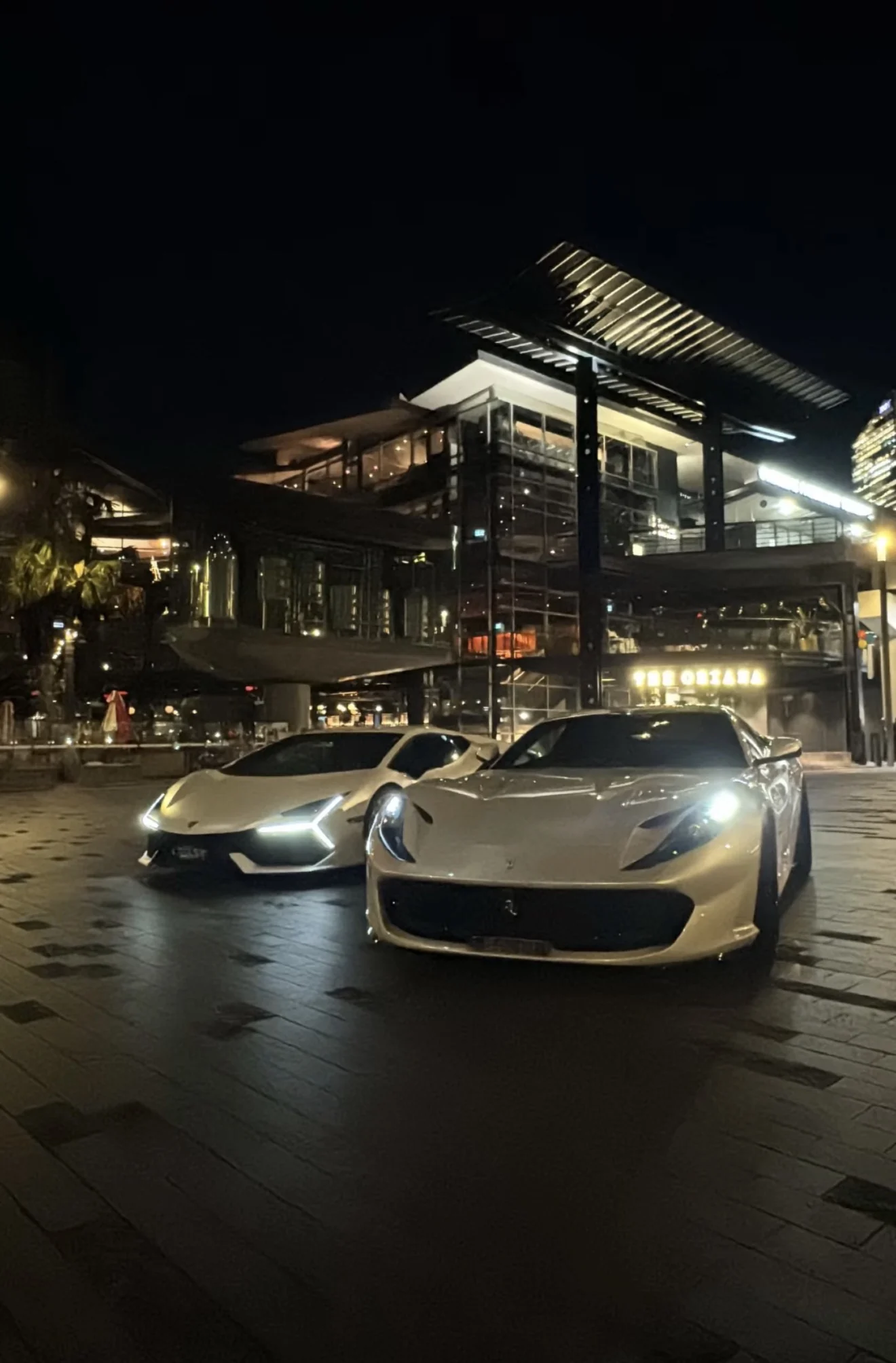
The instinct is to shoot at midnight for empty streets. In practice the useful window opens earlier. Blue hour — the twenty or so minutes after sunset when the sky still holds colour — is the single most flattering light the city offers, because the sky is dark enough for the lights to read but not so dark that the car loses its shape against it. After that you are working with pure artificial light, which is fine but less forgiving. Plan the hero frames for blue hour and let the later hours be the bonus.
What the car needs to be
Colour matters more at night than in the day. Pale cars — our white Revuelto, the 812 — hold their edges against a black background and pick up every colour around them. A black car at night is a genuinely advanced shot: beautiful when the lighting is deliberate, invisible when it isn't. Presentation is unforgiving too, because every light source rakes across the paint and finds each mark — which is the real reason every car goes out detailed rather than merely clean.
How a night shoot actually runs
The practical shape is simple. Tell us the locations and the order, and we chauffeur the car between them and hold it while you work, so nobody on your team is parking a supercar in the city at 11pm or watching it while you shoot. Hours are the thing to get right — two locations with real setup time is a three-hour job, not a one-hour one, once you count the moves. If the shoot is commercial, see photo and video hire; if the point is the night out rather than the images, a birthday or formal booking covers the same ground.
A short list worth stealing
Five things that decide a night shoot before you press the shutter:
- Wet ground — the single biggest upgrade, and it is free
- Blue hour — book the hero frames for the half hour after sunset
- A pale car — it holds its shape against black
- Three light sources — something warm, something cold, something reflected
- Real hours — count the moves between locations, not just the shooting
When you have a date, check availability or build a line-up if you want more than one car in frame.
Night shoot FAQs
Can we shoot more than one car at once?
Yes — a pair is often the better photograph, because the second car gives the frame depth and a second set of lights. Build a line-up and tell us the locations.
Do you drive the car for the shoot?
Every hire is chauffeur-driven, including shoots. The chauffeur repositions the car as many times as you need within the booked hours, which is faster than it sounds once you are working to a shot list.
How many hours should we book?
For one location, two hours is usually comfortable. For two or more, allow three or more — the moves between locations eat more time than the shooting does.
What if it rains?
For a night shoot, light rain is a gift rather than a problem: it is what makes the ground reflect. Heavy rain is different, and we would rather move the date than hand you a bad set of frames.